handiani.
Jul 23, 2025 · 2 min read
How I Built a Customizable QR Code Generator Using Next.js
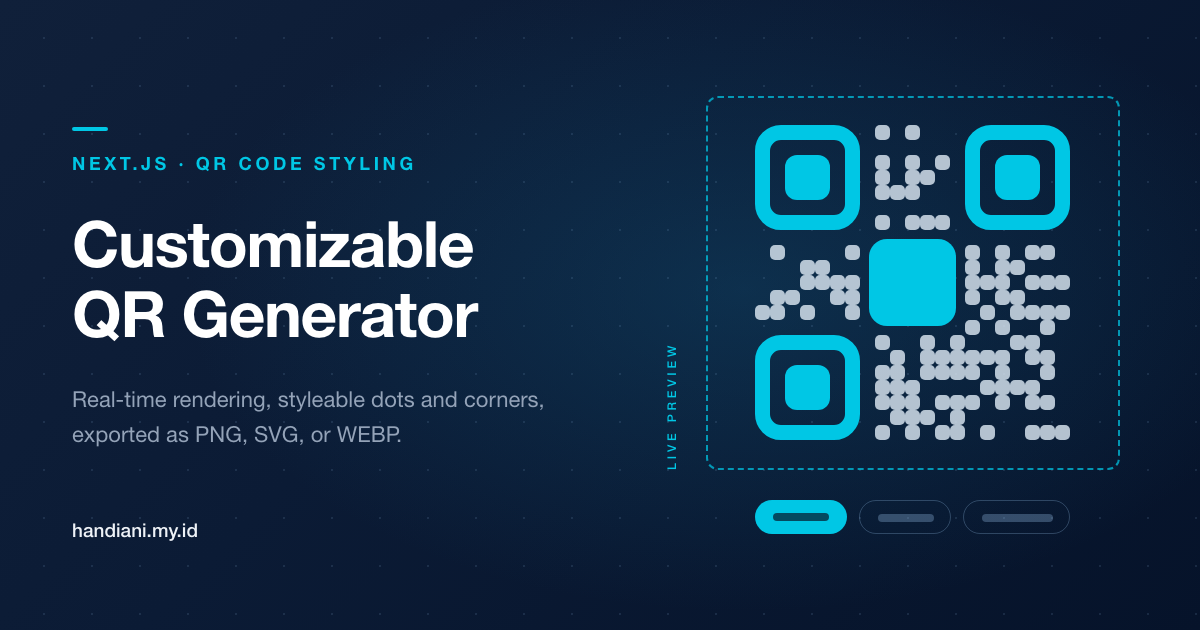
A Next.js app that renders QR codes as you type and lets you restyle every part — dots, corners, colors, an embedded logo — then export to PNG, JPEG, SVG, or WEBP.
Introduction
In today’s digital age, QR codes have become a powerful tool for sharing information quickly and seamlessly. Whether it’s a website link, event details, or product information, QR codes make data sharing effortless. Inspired by this convenience, I created a QR Code Generator app, hosted at qr.handiani.my.id, that allows users to create and customize QR codes easily.
In this blog post, I’ll walk you through how I developed this project using Next.js and other modern tools. If you’re interested in building your own QR code generator or learning about my tech stack, read on!
Key Features of the QR Code Generator
- Real-Time QR Code Rendering: Users can input a URL or text and immediately see the corresponding QR code.
- Extensive Customization Options: Options include dot styles, colors, shapes, and even uploading custom images.
- Downloadable in Multiple Formats: Users can download their QR code in PNG, JPEG, SVG, or WEBP formats.
- Dark and Light Mode Support: Built-in theme toggling for better user experience.
Tools and Technologies
Here’s the stack I used for this project:
- Frontend Framework: Next.js 14 with the App Router.
- Styling: Tailwind CSS and NextUI for beautiful, responsive design.
- QR Code Library: qr-code-styling for advanced QR code customization.
- Color Picker: react-colorful for a sleek, user-friendly color selection.
- Deployment: The app is deployed on a custom domain with Vercel.
Application Structure
The project is divided into two main components:
1. QrCode Component This component handles the QR code rendering and downloading functionality. Below is a brief overview of how it works:
tsx
import { useEffect, useRef, useState } from "react";
import QRCodeStyling from "qr-code-styling";

const QrCode = ({ data, options }) => {
  const qrCodeRef = useRef(null);
  const qrCode = useRef(null);

  const [extension, setExtension] = useState("png");
  const [name, setName] = useState("qr");

  const onDownloadClick = () => {
    qrCode.current?.download({ name, extension });
  };

  useEffect(() => {
    if (!qrCode.current) {
      qrCode.current = new QRCodeStyling({ data, ...options });
    }
    qrCode.current.update({ data, ...options });

    if (qrCodeRef.current) {
      qrCode.current.append(qrCodeRef.current);
    }
  }, [data, options]);

  return (
    <div>
      <div ref={qrCodeRef}></div>
      <button onClick={onDownloadClick}>Download QR Code</button>
    </div>
  );
};

export default QrCode;
2. Home Component The home page integrates the QrCode component and provides user-friendly controls for customization. Features include:
- Input field for data (URL or text).
- Uploading a custom image to embed in the QR code.
- Sliders and pickers for customizing colors, shapes, and margins.
Key Customization Options
Users can adjust the following settings:
- QR Code Dimensions: Control the width and height.
- Colors: Adjust dot, background, and corner colors using a color picker.
- Dot Styles: Choose from various styles like square, rounded, or dots.
- Corners: Customize the look of the corner dots and squares.
- Embedded Images: Add a logo or any image to the center of the QR code.
Here’s an example of the controls:
tsx
<Input
  label="Text or URL"
  value={data}
  onChange={(e) => setData(e.target.value)}
  placeholder="Input your text"
/>

<RadioGroup
  label="Shape"
  value={options.shape}
  onChange={(shape) => setOptions({ ...options, shape })}
>
  <Radio value="circle">Circle</Radio>
  <Radio value="square">Square</Radio>
</RadioGroup>

<HexAlphaColorPicker
  color={options.backgroundOptions?.color}
  onChange={(color) => setOptions({ ...options, backgroundOptions: { color } })}
/>
Challenges and Solutions
- Dynamic Rendering with Next.js: Using the useEffect hook ensured the QR code updates dynamically when user inputs or settings change.
- Managing State for Complex Options: By using useState hooks and passing a single options object, I maintained a clean and scalable state structure.
- File Downloads in Multiple Formats: The qr-code-styling library made it simple to export the QR code in formats like PNG and SVG.
Conclusion
Building this QR Code Generator was a rewarding experience that combined creativity and technical skills. The app offers users a seamless way to create and customize QR codes for personal or professional use.
Try it out for yourself at gaweqr.my.id, and let me know your thoughts! Happy coding!
Related posts

Building a Bilingual Portfolio with Next.js, next-intl, and Payload CMS
Jun 28, 2026 · 4 min readA walkthrough of making a portfolio fully bilingual (EN/ID) — subpath routing with next-intl, per-field content localization in Payload CMS, and the 404 and SEO gotchas I hit along the way.
Next.jsnext-intlPayload CMSi18n
Streamlining Form Handling in Next.js with React Hook Form and TypeScript
Dec 20, 2024 · 2 min readBuilding a type-safe registration form in Next.js with React Hook Form and a Zod schema — setup, validation, and wiring the component into a page, step by step.
Next.jsReactTypeScriptReact Hook Form
Building Interactive Scroll Animations with React and Framer Motion
Dec 18, 2024 · 2 min readA reusable AnimatedSection component that animates content in and out of the viewport based on scroll direction and position, built with Framer Motion and React hooks.
Next.jsReactFramer Motion